Origin Story:
How The Pride Watch Came to Be
August 5, 2026
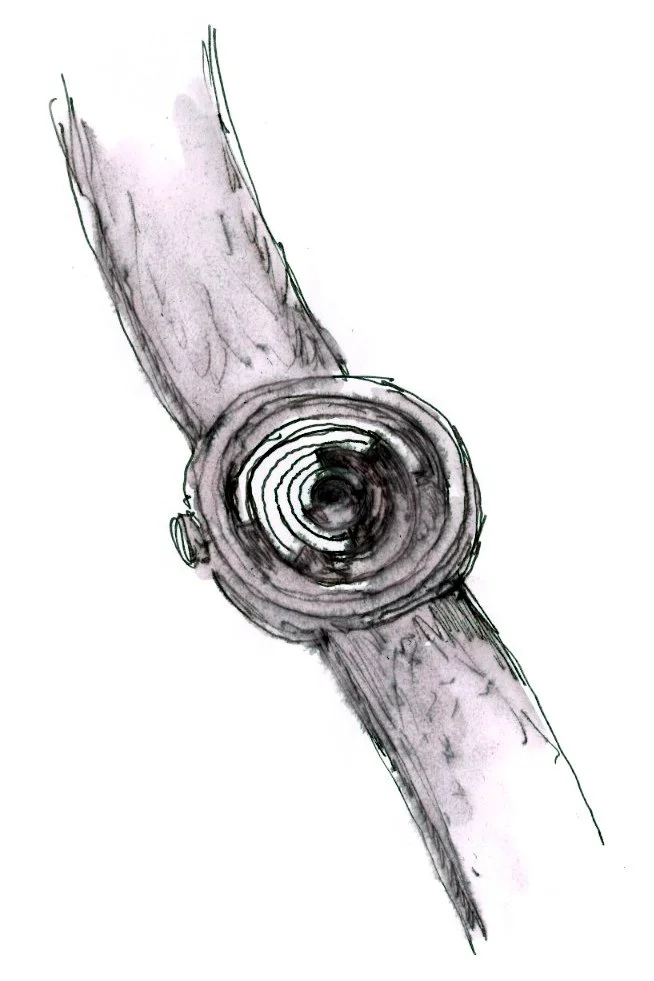
Back in 2019, while designing watches for the now-defunct Projects Watches, I called the then-CEO, Jack Markuse, monthly with new ideas. He met most with enthusiasm, tempered by critique about manufacturing limits or marketability, but he always listened.
The Pride Watch pitch grew out of a simple observation: most Pride-oriented products felt shallow, often just existing designs with rainbow graphics slapped on. Watch design was especially guilty of this. I asked myself: what would a Pride watch look like if the rainbow were intrinsic to the design, not an add-on, such that removing the Pride elements would leave no design at all?
The first design concepts were not fully resolved; to say the least, they featured rainbow iconography on the bands that stretched to the case, potentially with layered colors. These ideas were, as I see it, a necessary stepping stone to get to a fully formed idea.
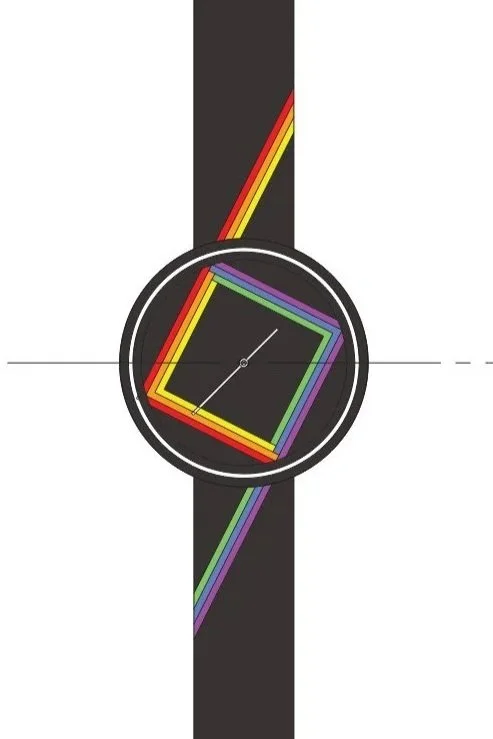
After the initial concept sketches, it was clear I needed to think more deeply. Returning to the core question, how could the rainbow be intrinsic to a watch, I started sketching rainbows and became captivated by their circular form. Then it clicked: that same curve lends itself naturally to a watch case.
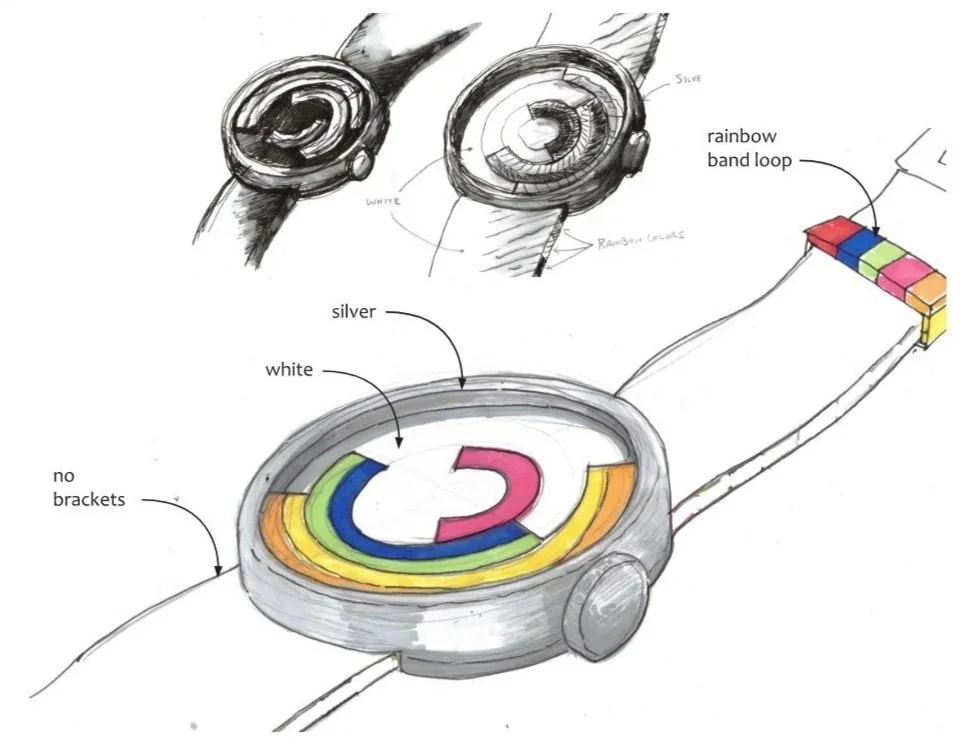
That led to the next question: could the rainbow itself become the hands of the watch? I got to work shaping watch hands into rainbow arcs, but the cantilevered forms were too heavy to function. Painting onto transparent discs proved far more workable.
Once the method was resolved, proportion became critical. Each rainbow band had to match in width and dimension to read correctly, and it took several iterations to find a size that worked within manufacturing constraints.
What advice do you have for other creators?
In general, imagination is undervalued. Whatever your creation, stay curious and love the process. When it starts to feel derivative, move on!
Three words to describe your work/craft.
I am not a fan of mindless form-making. I see many current designs, whether it is products or buildings, which feature arbitrary angles or curves without purpose. I gravitate toward work that asks a question, takes a position, or is rooted in a big idea. Nonetheless, I am not following your three-word rule here, but in short, I try to create a conversation with my designs rather than a statement.
.
We’re all about celebrating creators and their projects. So, what’s your project?
I admire creative expression which engages any or all the senses, whether it is sound, sight, anything that can be perceived. I am also interested in the problem-solving associated with the creative process. It is most exciting to me when the solution and creative expression are intrinsically linked.
Tell us a little about yourself.
I began to understand myself better as an artist and designer while collaborating with SITE (Sculpture In The Environment) in New York. I would never refer to the work with common labels such as “design” or “art” to free the process from disciplinary assumptions. I care about concepts or ideas that resonate with people, as many people as possible, and I enjoy approaching creative work in this way. Whether it is a wristwatch or a city block, I try to ask the big questions first, regardless of scale.